
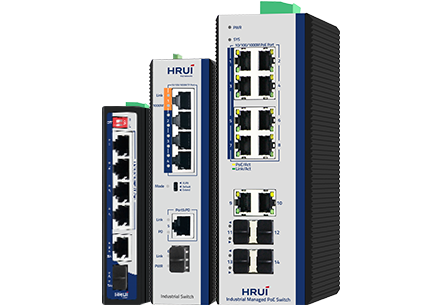

Wi-Fi 7 is moving into mainstream enterprise deployment, bringing higher wireless throughput and greater demands on the wired network behind each access point. As a result, upgrading the AP alone may not deliver the expected performance if the Ethernet infrastructure remains limited to Gigabit connections.
Does Wi-Fi 7 Require 2.5G Ethernet?
Not every Wi-Fi 7 deployment requires 2.5G Ethernet, but 2.5G is becoming a practical access speed for enterprise Wi-Fi 7 networks. It provides more bandwidth than Gigabit Ethernet while supporting many existing copper cabling environments.
The 2026 Ethernet Alliance Roadmap identifies 2.5G, 5G and 10GBASE-T as important enterprise technologies for Wi-Fi 7 and Wi-Fi 8 networks.
For this reason, a typical high-performance deployment can be structured as:
Wi-Fi 7 AP → 2.5G Ethernet → Multi-Gigabit PoE Switch → 10G Uplink
Why Does Wi-Fi 7 Need 10G Uplinks?
The requirement comes from traffic aggregation. A switch connecting multiple 2.5G Wi-Fi 7 APs can quickly carry several gigabits of traffic toward the aggregation or core layer.
A 10G uplink provides additional capacity and helps reduce oversubscription, particularly in high-density wireless environments. This makes uplink bandwidth an important consideration when selecting a switch for Wi-Fi 7.
What Type of Switch Is Needed for Wi-Fi 7?
There is no single switch specification for every deployment. The right switch should match the AP's bandwidth, power requirements and network density.
Key considerations include:
■ 2.5G or higher Ethernet ports
■ PoE capacity suitable for the selected APs
■ 10G uplinks for aggregated traffic
■ Compatible cabling for the target Ethernet speed
■ Sufficient switching capacity for the deployment
Gigabit Ethernet can still support Wi-Fi 7 in lower-throughput scenarios, but it may limit the usable capacity of higher-performance APs.
As Wi-Fi 7 adoption expands, multi-gigabit switching is becoming an important part of enterprise wireless infrastructure. The upgrade should therefore be considered end to end, from the AP and PoE access layer to the uplink and aggregation network.